NAD/NADH-Glo™ and NADP/NADPH-Glo™ Assays
Bioluminescent Assays to Detect NAD(P)+ and NAD(P)H Levels in Cells
- Homogeneous, single-reagent-addition assays
- Easily adapted for high-throughput screening formats


Catalog Number:
Choose a product
Size
Catalog Number: G9071
Catalog Number: G9072
Catalog Number: G9081
Catalog Number: G9082
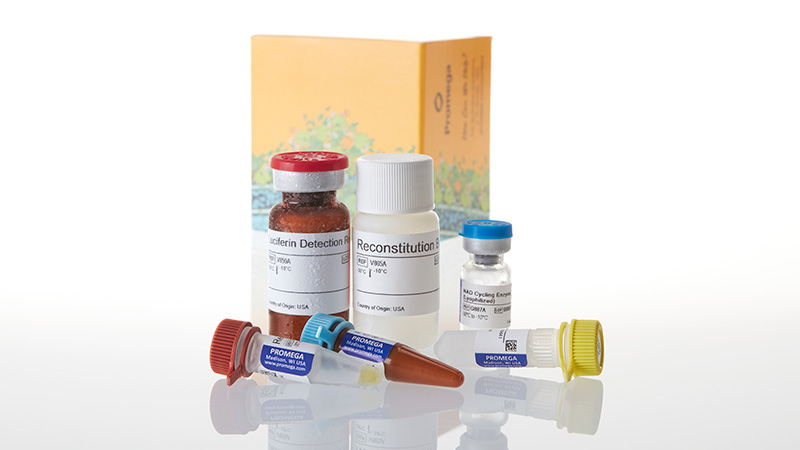
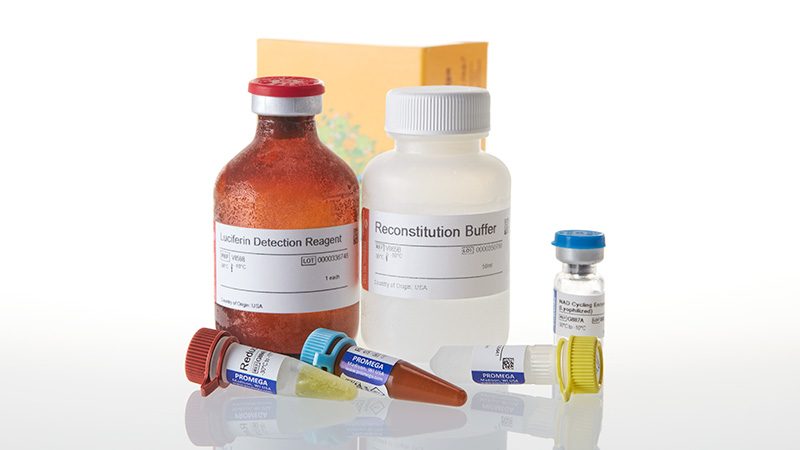
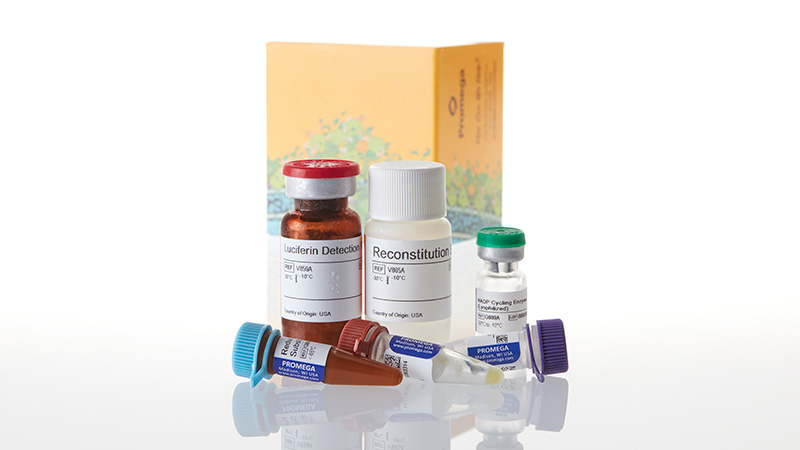
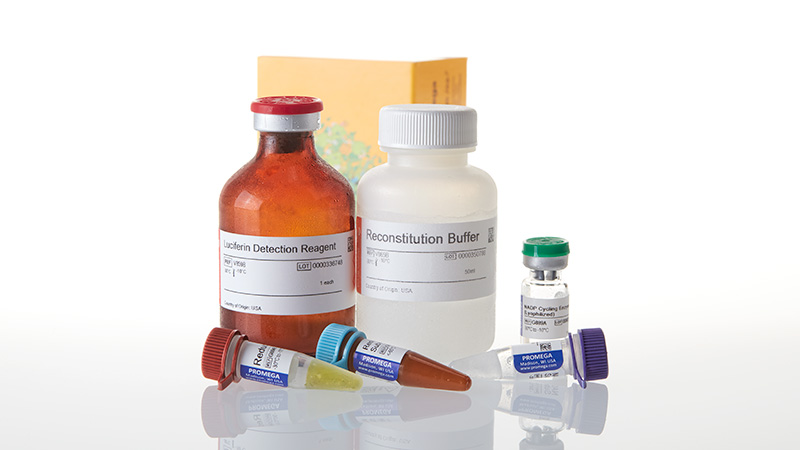
NAD/NADH-Glo™ Assay and NADP/NADPH-Glo™ Assays
The NAD/NADH-Glo and NADP/NADPH-Glo Assays are bioluminescent, homogeneous, single-reagent-addition methods to rapidly detect NAD+ and NADH and NADP+ and NADPH levels in cells and enzymatic reactions. Current methods to detect nicotinamide adenine dinucleotides lack sensitivity and reproducibility and require sample manipulation and large numbers of cells for cell-based applications. The assay is easily adapted for inhibitor screening in high-throughput formats. The sensitivity and robustness of the assay chemistry allow fewer cells to be used to detect individual nucleotides directly in multiwell plates or analysis of enzymes with low activity or with low Km values.
Low nanomolar sensitivity allows direct in-well detection and minimizes the amount of cells or enzyme required
| Assay | NAD/NADH-Glo™ Assay | NADP/NADPH-Glo™ Assay |
|---|---|---|
| Limit of Detection (LOD) | 1nM (25fmol/25µl) | 1nM (25fmol/25µl) |
| Linearity | 1–500nM | 1–500nM |
| Signal-to-background ratio (S/B max) | ~250 | ~250 |
| Cells/well for total dinucleotides | 500–25,000 | 500–12,000 |
| Cells/well for individual dinucleotides* | 2,000–100,000 | 2,000–100,000 |
| *Starting amount of cells; 1/4 of sample can be used to detect individual nucleotides | ||
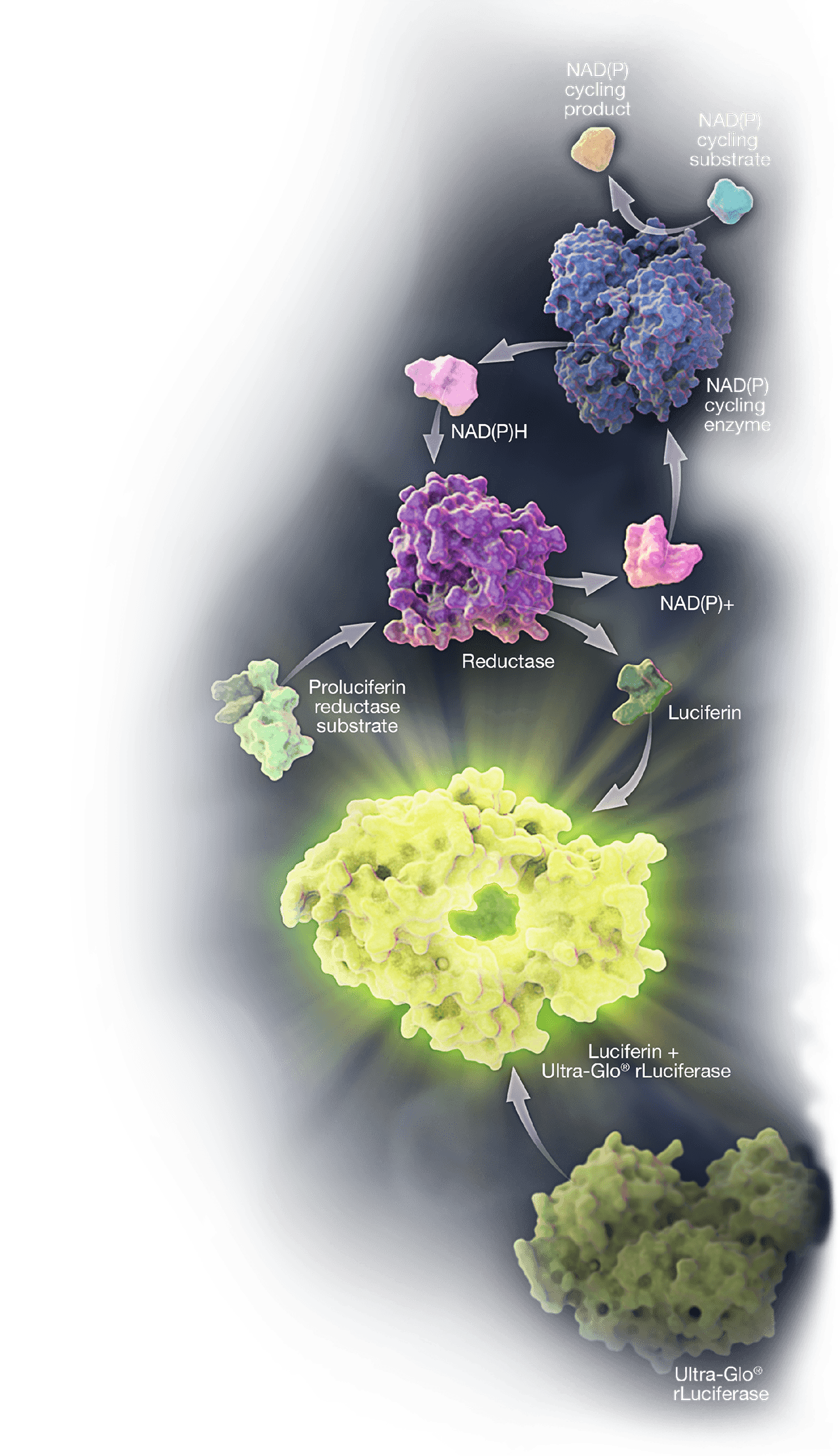
Assay Chemistry
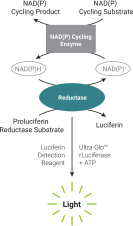
In the presence of NADH, a reductase provided with the assay, reduces the proluciferin reductase substrate to form luciferin. Luciferin is quantified using Ultra-Glo™ Recombinant Luciferase, which is a component of the Luciferin Detection Reagent, and the light signal produced is proportional to the amount of NAD+ or NADH in the sample.
Assays are Specific and Selective
Specificity is imparted to the NAD/NADH-Glo™ and NADP/NADPH-Glo™ Assay reactions by including NAD or NADP Cycling Enzyme and NAD or NADP Cycling Substrate to selectively measure nonphosphorylated and phosphorylated nucleotides, respectively. Accessory protocols are provided to allow separate measurements of NAD+ and NADH or NADP+ and NADPH and calculation of the ratio of the oxidized and reduced forms.
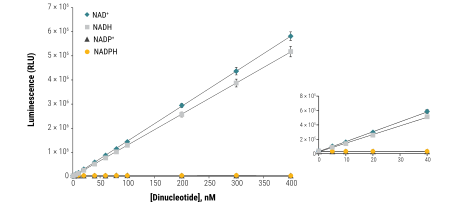
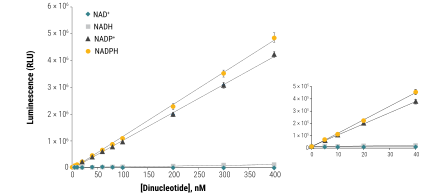
NADH, NADPH, NAD+ and NADP+ were prepared and diluted to the indicated concentrations in phosphate-buffered saline.
The NAD/NADH-Glo™ Assay is selective for NAD+ and NADH
The NADP/NADPH-Glo™ Assay is selective for NADP+ and NADPH
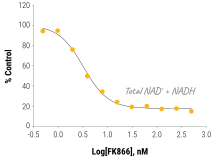
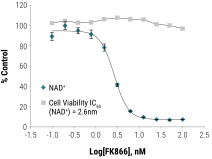
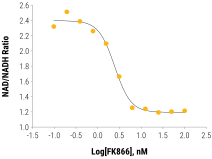
Rapidly Assess Total, NAD(P)+ and NAD(P)H Changes Directly in Cells in Culture Wells
Detergent present in the reagent lyses cells, allowing detection of total cellular NAD+ and NADH or NADP+ and NADPH. For the NAD/NADH-Glo™ Assay, an accessory protocol is provided to allow separate measurements of NAD+ and NADH and calculation of the ratio of the oxidized and reduced forms. All reactions are performed directly in the sample wells.
Compatible with High-Throughput Systems
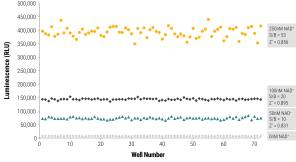
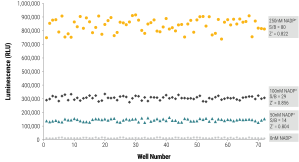
The simple add-and-read protocols are compatible with automated and high-throughput workflow, and the flexible chemistries adapt to 96-, 384- and 1,536-well plate formats and high-throughput systems. They yield Z′ values >0.7. Assays were performed using 8μl of the indicated concentration of NADH or NADPH with 8μl of the appropriate Luciferin Detection Reagent in 384-well plates. S/B = signal-to-background ratio.
NAD/NADH-Glo™ Assay Results
NADP/NADPH-Glo™ Assay Results
Specifications
Catalog Number:
What's in the box?
| Item | Part # | Size | Concentration |
|---|---|---|---|
Reductase |
G884A | 1 × 55μl | 6mg/ml |
Reductase Substrate |
G885A | 1 × 55μl | |
NAD Cycling Enzyme (lyophilized) |
G887A | 1 × 1 vial | |
NAD Cycling Substrate |
G888A | 1 × 1.25ml | |
|
Luciferin Detection Reagent |
V859A | 1 × 1 each | |
|
Reconstitution Buffer |
V865A | 1 × 10ml |
SDS
Search for SDSCertificate of Analysis
Use Restrictions
For Research Use Only. Not for Use in Diagnostic Procedures.Storage Conditions
U.S. Pat. Nos. 9,273,343 and 9,951,372, European Pat. No. 2751089, Japanese Pat. No. 6067019 and other patents pending.
What's in the box?
| Item | Part # | Size | Concentration |
|---|---|---|---|
Reductase |
G884B | 1 × 275μl | 6mg/ml |
Reductase Substrate |
G885B | 1 × 275μl | |
NAD Cycling Enzyme (lyophilized) |
G887A | 1 × 1 vial | |
NAD Cycling Substrate |
G888A | 1 × 1.25ml | |
|
Luciferin Detection Reagent |
V859B | 1 × 1 each | |
|
Reconstitution Buffer |
V865B | 1 × 50ml |
SDS
Search for SDSCertificate of Analysis
Use Restrictions
For Research Use Only. Not for Use in Diagnostic Procedures.Storage Conditions
U.S. Pat. Nos. 9,273,343 and 9,951,372, European Pat. No. 2751089, Japanese Pat. No. 6067019 and other patents pending.
What's in the box?
| Item | Part # | Size | Concentration |
|---|---|---|---|
Reductase |
G884A | 1 × 55μl | 6mg/ml |
Reductase Substrate |
G885A | 1 × 55μl | |
NADP Cycling Enzyme (lyophilized) |
G889A | 1 × 1 vial | |
NADP Cycling Substrate |
G890A | 1 × 275μl | |
|
Luciferin Detection Reagent |
V859A | 1 × 1 each | |
|
Reconstitution Buffer |
V865A | 1 × 10ml |
SDS
Search for SDSCertificate of Analysis
Use Restrictions
For Research Use Only. Not for Use in Diagnostic Procedures.Storage Conditions
U.S. Pat. Nos. 9,273,343 and 9,951,372, European Pat. No. 2751089, Japanese Pat. No. 6067019 and other patents pending.
What's in the box?
| Item | Part # | Size | Concentration |
|---|---|---|---|
Reductase |
G884B | 1 × 275μl | 6mg/ml |
Reductase Substrate |
G885B | 1 × 275μl | |
NADP Cycling Enzyme (lyophilized) |
G889A | 1 × 1 vial | |
NADP Cycling Substrate |
G890A | 1 × 275μl | |
|
Luciferin Detection Reagent |
V859B | 1 × 1 each | |
|
Reconstitution Buffer |
V865B | 1 × 50ml |
SDS
Search for SDSCertificate of Analysis
Use Restrictions
For Research Use Only. Not for Use in Diagnostic Procedures.Storage Conditions
U.S. Pat. Nos. 9,273,343 and 9,951,372, European Pat. No. 2751089, Japanese Pat. No. 6067019 and other patents pending.
Resources
Citations
-
Regulation of cancer stem cell metabolism by secreted frizzled-related protein 4 (sFRP4).
2018
Cancers (Basel)
-- -
The redox status of cancer cells supports mechanisms behind the Warburg effect
2016
Metabolies
-- -
Targeting the cytochrome bc1 complex of Leishmania parasites for discovery of novel drugs.
2016
Antimicrob. Agents Chemother.
-- -
Thiol reductive stress induces cellulose-anchored biofilm formation in Mycobacterium tuberculosis
2016
Nat. Commun.
-- -
Uncoupling of the Hippo and Rho pathways allows megakaryocytes to escape the tetraploid checkpoint.
2016
Haematologica
-- -
Re-wiring of energy metabolism promotes viability during hyperreplication stress in E. coli.
2017
PLoS Genet.
-- -
Dual and specific inhibition of NAMPT and PAK4 by KPT-9274 decreases kidney cancer growth.
2016
Mol. Cancer Ther.
-- -
Anti-apoptotic quinolinate phosphoribosyltransferase (QPRT) is a target gene of Wilms’ tumor gene 1 (WT1) protein in leukemic cells
2017
Biochem. Biophys. Res. Commun.
-- -
Hormetic shifting of redox environment by pro-oxidative resveratrol protects cells against stress.
2016
Free Radic Bio Med
-- -
Laterosporulin10: a novel defensin like class IId bateriocin from Brevibacillus sp. strain SKDU10 with inhbitory activity against microbial pathogens
2016
Microbiology
-- -
Oxaloacetate enhances neuronal cell bioenergetic fluxes and infrastructure.
2016
J. Neurochem.
-- -
E4F1-mediated control of pyruvate dehydrogenase activity is essential for skin homeostasis.
2016
-- -
Combining metabolic engineering and biocompatible chemistry for high-yield production of homo-diacetyl and homo-(S,S)-2,3-butanediol.
2016
Metab Eng
-- -
Myc-driven glycolysis is a therapeutic target in glioblastoma.
2016
Clin. Can. Res.
-- -
Hormone and receptor interplay in the regulation of mosquito lipid metabolism.
2017
-- -
Nuclear localization of mitochondrial TCA cycle enzymes as a critical step in mammalian zygotic genome activation.
2017
Cell
-- -
Leveraging an NQO1 bioactivatable drug for tumor-selective use of poly (ADP-ribose) polymerase inhibitors.
2016
-- -
FAF1 mediates regulated necrosis through PARP1 activation upon oxidative stress leading to dopaminergic neurodegeneration.
2016
Cell Death Differ.
-- -
1001 lights: luciferins, luciferases, their mechanisms of action and applications in chemical analysis, biology and medicine
2016
-- -
Pharmacological inhibition of fatty-acid oxidation synergistically enhances the effect of L-asparaginase in childhood ALL cells.
2016
Leukemia
-- -
AIF-independent parthanatos in the pathogenesis of dry age-related macular degeneration.
2017
Cell Death Differ.
-- -
The neuroprotective compound P7C3-A20 promotes neurogenesis and improves cognitive function after ischemic stroke
2017
Exp. Neurol.
-- -
Functional divergence of SIR2 orthologs between trypanosomatid parasites.
2016
Mol. Biochem. Parasitol.
-- -
Induction of autophagy by ARHI (DIRAS3) alter fundamental metabolic pathways in ovarian cancer models.
2016
BMC Cancer
-- -
Ketamine causes mitochondrial dysfunction in human induced pluripotent stem cell-derived neurons.
2015
PLos ONE
-- -
A genetically encoded tool for manipulation of NADP+/NADPH in living cells
2017
Nat Chem. Biol.
-- -
Large-scale label-free comparative proteomics analysis of polo-like kinase 1 inhibition via the small-molecule inhibitor BI 6727 (Volasertib) in BRAFV600E mutant melanoma cells.
2014
J. Proteome Res.
-- -
The alkylating chemotherapeutic temozolomide induces metabolic stress in IDH1-mutant cancers and potentiates NAD+ depletion-mediated cytotoxicity.
2017
Cancer Res.
-- -
NNT reverse mode of operation mediates glucose control of mitochondrial NADPH and glutathione redox state in mouse pancreatic β-cells.
2017
Mol. Metab.
-- -
Diverse NADase effector families mediate interbacterial antagonism via the type VI secretion system.
2018
J. Biol. Chem.
-- -
A genetically encoded tool for manipulation of NADP+/NADPH in living cells.
2017
Nat Chem. Biol.
-- -
α-amino-β-carboxymuconate-ε-semialdehyde decarboxylase (ACMSD) inhibitors as novel modulators of de novo nicotinamide adenine dinucleotide (NAD+) biosynthesis.
2018
J. Med. Chem.
-- -
Cytotoxicity of propofol in human induced pluripotent stem cell-derived cardiomyocytes.
2018
J. Anesth.
-- -
NNT reverse mode of operation mediates glucose control of mitochondrial NADPH and glutathione redox state in mouse pancreatic β-cells
2017
Mol. Metab.
-- -
NAMPT inhibition sensitizes adenocarcinoma cells to tumor-selective, PAR-independent metabolic catastrophe and cell death induced by β-lapachone.
2014
Cell Death Dis.
-- -
NRF2 regulates serine biosynthesis in non-small cell lung cancer.
2015
Nat. Genet.
-- -
The airway epithelium undergoes metabolic reprogramming in individuals at high risk for lung cancer.
2016
JCl Insight
-- -
Loss of BRCA1 in the Cells of Origin of Ovarian Cancer Induces Glycolysis: A Window of Opportunity for Ovarian Cancer Chemoprevention.
2017
Cancer Prev. Res.
-- -
Augmentation of glycolytic metabolism by meclizine is indispensable for protection of dorsal root ganglion neurons from hypoxia-iduced mitochondrial compromise.
2016
Free Radic Bio Med
-- -
Inhibition of the pentose phosphate pathway by dicloroacetate unravels a missing link between aerobic glycolysis and cancer cell proliferation.
2016
Oncotarget
-- -
The immune-metaboic basis of effector memory CD4+ T cell function under hypoxic conditions.
2016
J. Immunol.
-- -
IKKβ promotes metabolic adaptation to glutamine deprivation via phosphorylation and inhibition of PFKFB3
2016
Genes Dev.
-- -
PHGDH expression is required for mitochondrial redox homeostasis, breast cancer stem cell maintenance, and lung metastasis.
2016
Cancer Res.
-- -
Fenofibrate induces ketone body production in melanoma and glioblastoma cells.
2016
Front Endocrinol
-- -
Loss of BRCA1 in the cells of origin of ovarian cancer induces glycolysis: A window of opportunity for ovarian cancer chemoprevention.
2017
Cancer Prev. Res.
-- -
Rational Design of a Parthenolide-based Drug Regimen That Selectively Eradicates Acute Myelogenous Leukemia Stem Cells.
2016
J. Biol. Chem.
-- -
Gene silencing of endothelial von Willebrand Factor attenuates angiotensin II-induced endothelin-1 exression in porcine aortic endothelial cells.
2016
Sci. Rep.
-- -
MPC1, a key gene in cancer metabolism, is regulated by COUPTFII in human prostate cancer.
2016
Oncotarget
-- -
Mitochondrial glutamine metabolism via GOT2 supports pancreatic cancer growth through senescence inhibition.
2018
Cell Death Dis.
-- -
Guidelines on experimental methods to assess mitochondrial dysfunction in cellular models of neurodegenerative diseases.
2018
Cell Death Differ.
-- -
CPT1A-mediated fatty acid oxidation promotes colorectal cancer cell metastasis by inhibiting anoikis.
2018
Oncogene
-- - See all citations
Other Resources
Related Products
Similar Products
NAD(P)H-Glo™ Detection System
Bioluminescent assay that quantifies the concentration of the reduced forms of NADH and NADPH.
G9061, G9062
Glucose Uptake-Glo™ Assay
Non-radioactive assay for measuring glucose uptake.
J1341, J1342, J1343
Lactate-Glo™ Assay
Biolomunescent assay that quickly detect lactate from a variety of sample types.
J5021, J5022
GSH/GSSG-Glo™ Assay
Homogeneous assay to quantify total glutathione and glutathione ratios.
V6611, V6612
Frequently Used With
ROS-Glo™ H2O2 Assay
Sensitive, bioluminescent assay that measures the level of H2O2 in cell cultures.
G8820, G8821
GloMax® Discover System
High-performance microplate reader for detecting luminescence, fluorescence and absorbance.
GM3000
GloMax® Navigator System
Dedicated microplate luminometer.
GM2000, GM2010